
Cochlear implant program brings advanced care to Driscoll
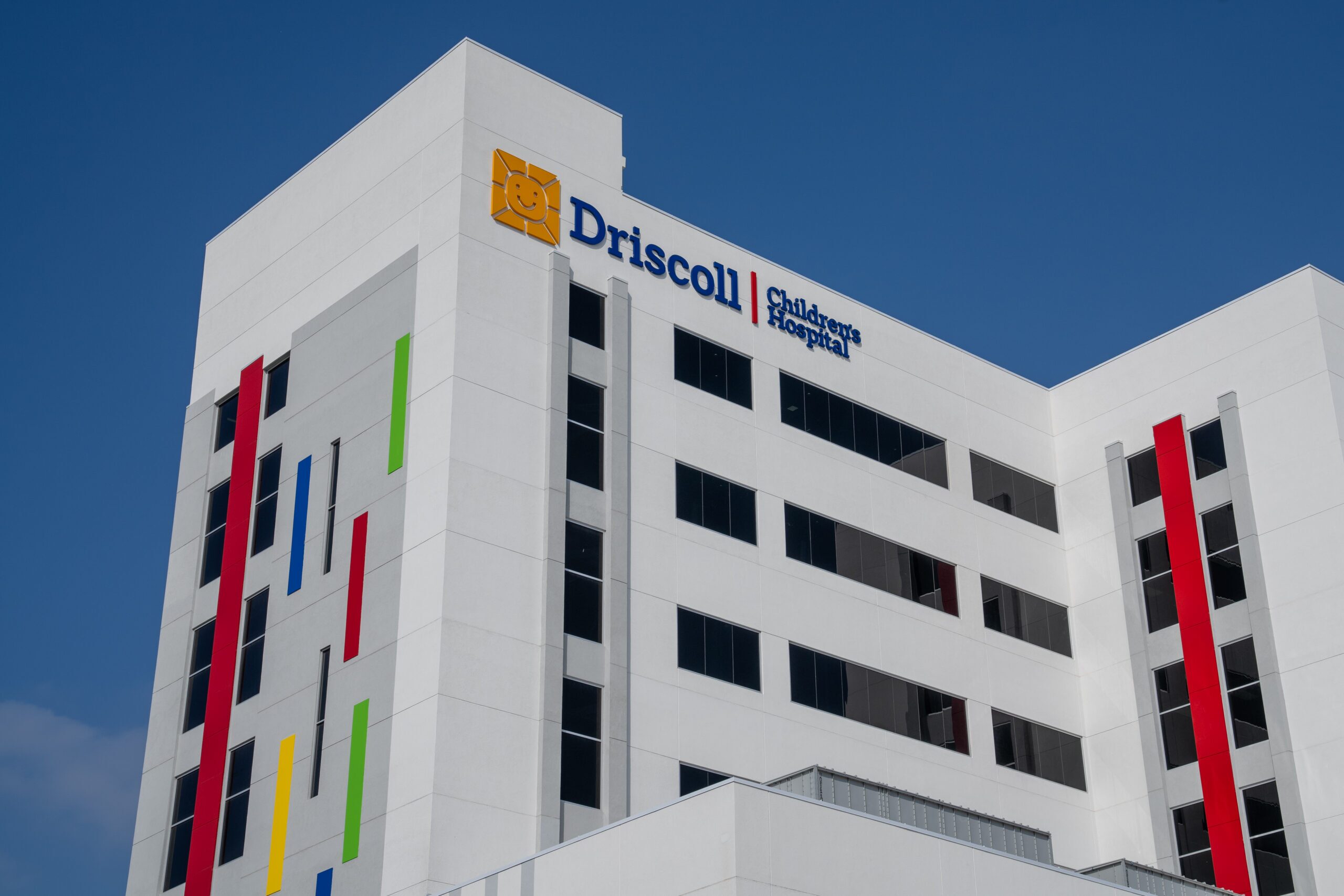
New cochlear implant program brings advanced care to Driscoll.
For some children, the world begins in silence.
Words, music and even a parent’s voice arrive late or not at all, shaping how a child learns, connects and stays safe. For families across South Texas, access to advanced hearing care has often meant long drives and long waits.
Now, a new cochlear implant program at Driscoll Children’s Hospital is changing that and doing so during the most important years of a child’s life.
Dr. Roberto Solis, a pediatric ear, nose and throat surgeon, joined Driscoll in September with a clear mission: to build a hearing loss program in the Rio Grande Valley. From the start, he knew it had to be different. “Not just pediatric ENT, but complex pediatric ENT,” he said.
It would require strong support, a solid foundation and a highly specialized team.
But in just a few months, that vision has taken shape. Driscoll has launched a comprehensive cochlear implant program that brings advanced technology, specialized care and long-term support closer to home for children and families across the region.
Building access close to home
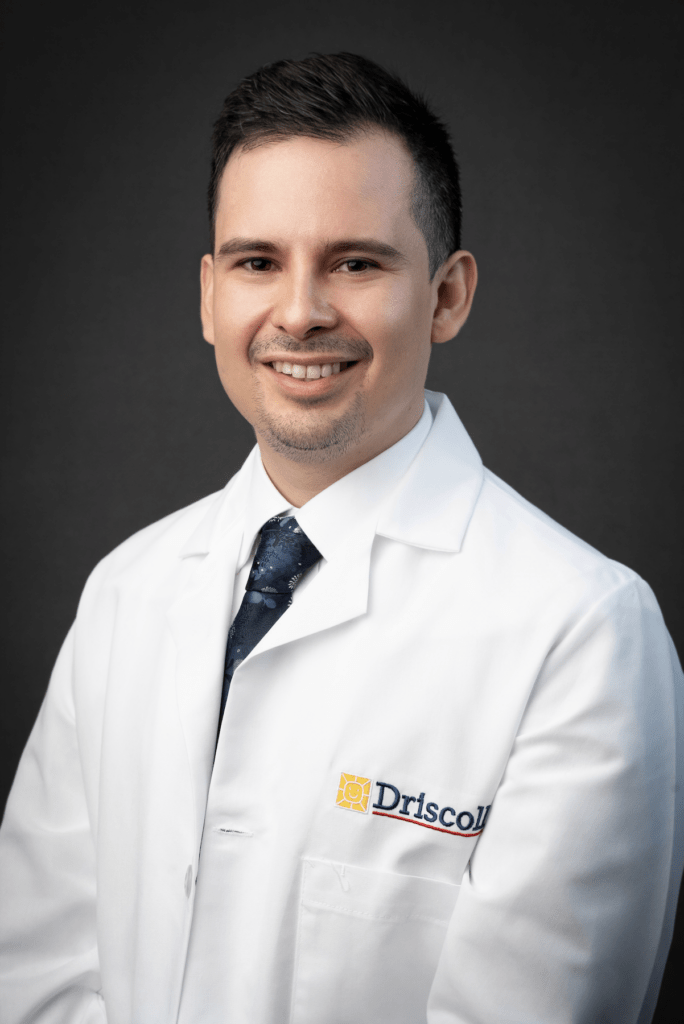
Dr. Solis grew up in the Rio Grande Valley and trained at the University of California, Davis (UC Davis) and Vanderbilt University, which he calls “the premier ear program in the country.”
“They’re at the forefront of innovation and pushing the boundary for chronic ear disease and hearing loss,” he said.
That experience shaped his approach at Driscoll. Soon after arriving, Dr. Solis helped form a dedicated, multidisciplinary cochlear implant team. The group meets twice a month to review patients who may benefit from implantable hearing devices, including cochlear implants and bone-anchored hearing aids.
Dr. Solis is quick to share credit for the program. “I am just a surgeon,” he said. “You need dedicated audiologists and support staff.”
Driscoll has two cochlear implant–specific audiologists, he explained, and they do a lot of the heavy lifting. From evaluation through long-term follow-up, he describes the work as fully team-based.
“Without the team, it wouldn’t be possible,” Dr. Solis said. “A cochlear implantation isn’t just the surgery. It’s the efforts around the entire process.”
That process is especially important for families who face added barriers to care.
“In my short time here, I’ve found a number of complex cases of children who traditionally would go underserved,” he said. “Or they would have to travel to Corpus Christi or Houston to get this level of care.”
Driscoll’s program removes that obstacle. Families can now access evaluations, surgery and ongoing follow-up in one place, reducing travel and helping children stay on track during a critical time for speech and language development.
A new generation of technology
In November, Driscoll completed its first cochlear implant case to use the Cochlear Nexa. The child became the first in South Texas to receive the next-generation implant released in the United States this fall.
“What’s unique about it is that it offers smarter sound processing,” Dr. Solis said. “Children are better able to tell the difference between speech and background noise.”
The device is also designed to grow with the child.
“The software can be upgraded without needing to exchange the device,” Dr. Solis said. “Before, if a new technology came out that really changed how implants worked, a child would need another surgery to remove the old device and put in a new one.”
That extra surgery carried risks.
“An explantation and reimplantation comes with another general anesthetic,” Dr. Solis said. “There’s the risk that you can’t reinsert a new device and scar tissue can impact how well the new implant works.”
The new technology avoids that risk, allowing children to benefit from future advances without more surgery.
The team moved quickly for Driscoll’s first patient.
“We expedited her because she was getting older and we wanted to give her the best chance at the best outcome,” Dr. Solis said.
Hearing is a journey, not a switch
Even with advanced technology, cochlear implants do not restore hearing overnight.
“It’s not like a light switch,” Dr. Solis explained. “The brain has to adapt to a new stimulus.”
The implant is activated two to three weeks after surgery. From there, children begin a long process of learning how to interpret sound.
“That adaptation can take months to a year,” Dr. Solis said. “And even after a year, children continue to gain benefits.”
Audiologists play a key role during that time, adjusting the device during frequent follow-up visits. “It has to be very nuanced and titrated to each specific patient,” explained Dr. Solis.
Speech-language pathologists, early intervention specialists and families are also essential. Together, they help children build speech, language and confidence.
When hearing loss is identified early, the impact can be life changing.
“If we’re able to implant a child as soon as they turn one or even earlier, they can develop speech and language similar to a child without hearing loss,” Dr. Solis said. “For families, that’s truly life changing.”
The race against time
Dr. Solis stresses that early screening and follow-up make all the difference.
“If a child fails their newborn hearing screen, families and primary care doctors need to seek out ENT care,” he said. “If it gets brushed aside, that’s when children can go too long without hearing access.”
Missing that window can alter a child’s future.
“There are many patients who have missed the opportunity for an implant that would have set a different trajectory,” Dr. Solis said. “Once you miss that window, you can’t go back in time.”
Looking ahead, Dr. Solis hopes more families learn what Driscoll now offers.
“A major goal is for the community to be aware these services are here,” he said. “And to understand how early intervention changes outcomes.”
As awareness grows, so will the program.
“We already have a growing list of patients,” Dr. Solis said. “And we’ll need to bring in new team members to serve them.”
For Dr. Solis, bringing this care home is deeply personal.
“That’s why I joined Driscoll,” Dr. Solis said. “They made a real commitment to bring expertise and new technology to the RGV community. All children deserve the chance to hear, and being able to help make that possible here, especially where I grew up, has been a real privilege.”