
Driscoll Children’s helps boy with spina bifida find his stride
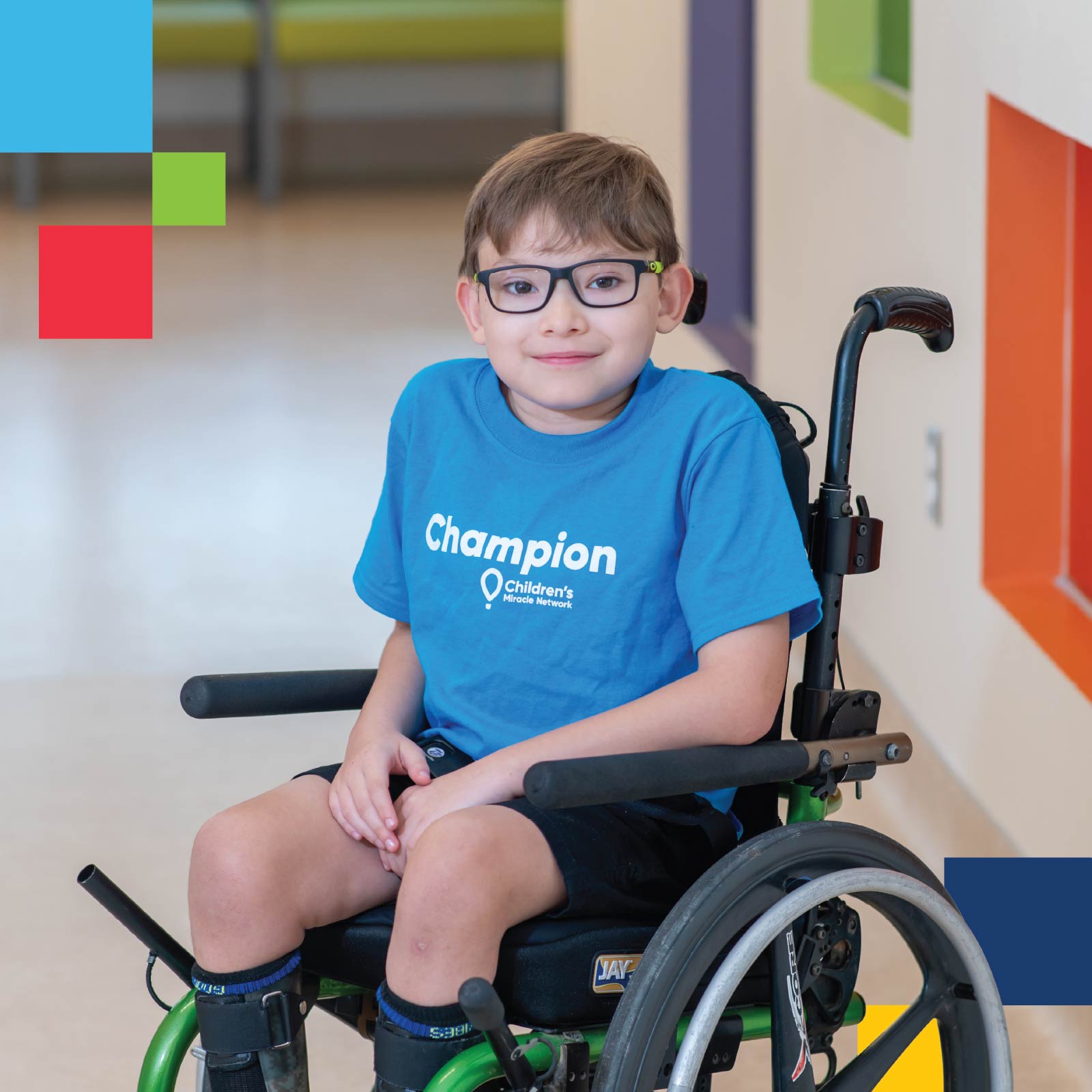
Before Cayden Montanez was born, his parents knew life might look different than they first imagined.
At about 15 weeks, Kelly and Michael Montanez went in for an ultrasound and got difficult news. Doctors saw that Cayden had spina bifida, a condition that affects the spine and can shape nearly every part of a child’s life.
Kelly still remembers the fear of that moment, and the many questions that followed.
“All you ever want is a healthy baby,” she said. “Then you find out that he’s not exactly a healthy baby, that he’s going to have to have surgery as soon as he’s born. And it’s scary and it’s emotional.”
But even in that stretch of worry, Driscoll Children’s Hospital began building a path forward for the Montanez family.
Before Cayden arrived, his care team was already taking shape. He had an MRI while Kelly was still pregnant. Doctors checked his heart before birth. Then, in a moment Kelly still calls perfect timing, Driscoll hosted a spina bifida conference just one month before Cayden was born.
For a family facing the unknown, that mattered.
“It kind of relaxed us a little bit,” Kelly said. “It just made it sound not so scary.”
It also gave them hope.
A fast start to a lifelong journey
Cayden was born at 38 weeks by scheduled cesarean section in May 2017. From the start, things moved quickly.
After delivery, baby Cayden was transferred straight to Driscoll. The next morning, he underwent spinal repair surgery to close the opening on his back caused by myelomeningocele, the most serious form of spina bifida.
Dr. Ashley Hanna, a Driscoll neurosurgeon, explained it simply: “Another term for that is spina bifida, which essentially means an open spine.”
The days that followed were tense. Kelly and Michael remembered how frightening it was to see their newborn son in the NICU, recovering from surgery and struggling at times in the early hours after anesthesia.
That first surgery was only the beginning.
At 10 days old, Cayden needed surgery to place a shunt and relieve fluid pressure caused by hydrocephalus, a buildup of fluid in the brain. Later, he needed two shunt revisions.
And then, at six months old, he underwent cranial surgery to repair part of his forehead. In the early months of his life, doctor visits became routine, and multiple specialists became a normal part of his world.
Kelly said the family once juggled appointments with a long list of specialists — from neurosurgery and urology to cardiology and GI — but they were never alone.
“Driscoll has meant everything,” she said. “We have had the best group of people around us this whole time.”
Small wins that became big ones
Then, slowly, the hardest stretch began to ease.
Doctor visits spread farther apart. Specialists started signing off. Weekly appointments turned into monthly ones, then six-month checkups, then yearly follow-ups in some areas.
Kelly said that change became one of the clearest signs that Cayden was getting stronger.
“The more space you could put between doctor’s appointments is when you realize that things are getting better,” she said.
There were other signs, too.
When Cayden was born, his family didn’t know how much feeling or movement he would have in his feet. Later, he began to wiggle his toes. He learned to crawl.
Today, he can stand and walk with help, though he often uses a wheelchair and walker to get around.
But Cayden doesn’t dwell on limits. His parents say that may be one of his greatest strengths.
“He doesn’t have this mindset that he’s disabled, so he can’t do this,” Kelly said. “He’s like, ‘If I want to do it, I’m going to.’ ”
That attitude shows up everywhere in his life.
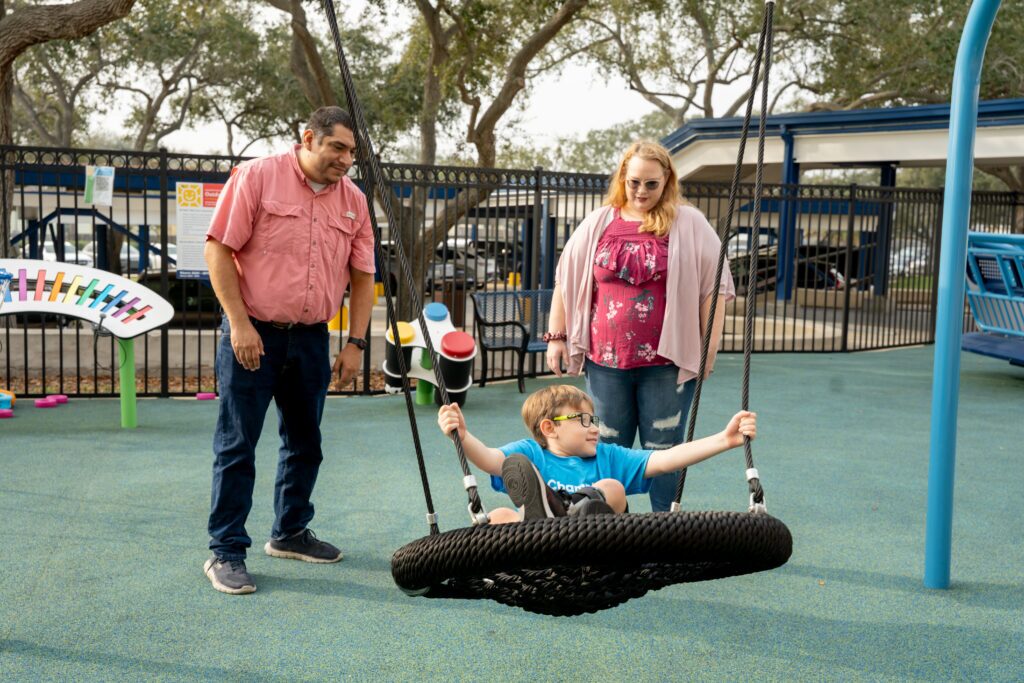
Cayden, who’ll turn nine in May, loves Minecraft, dinosaurs and talking about reptiles in great detail. He reads constantly. He races with a local adaptive team and keeps his medals in his room. He likes taking videos on his iPad and pretending he is making YouTube content.
He is, his parents said, the kind of kid people remember.
“He has more friends than anybody else,” Kelly said. “Everybody knows him. He’s like the popular kid at school.”
Racing forward
One of the clearest pictures of Cayden’s spirit can be found at the finish line.
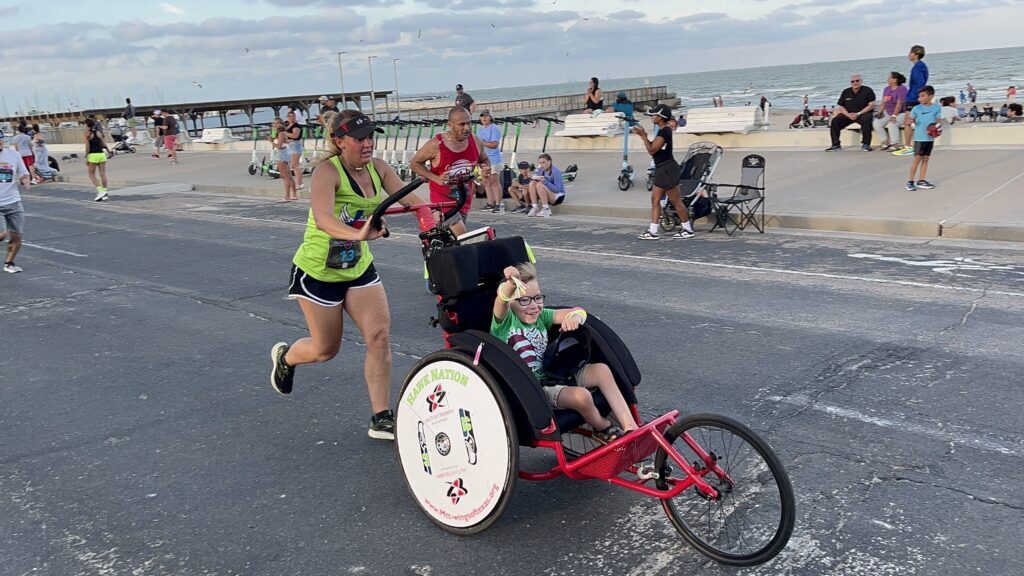
Since he was a little over two years old, Cayden has raced with Wings of Texas, a Corpus Christi-area group that supports athletes with disabilities. He has taken part in relays, 5Ks, 10Ks, a half marathon, a triathlon and even the Texas Independence Relay, a roughly 200-mile team event from Gonzales to Houston.
He has more than 70 medals.
“He loves it,” Michael said.
His dad often pushes him in a specialized racing chair. Other times, Driscoll nurse practitioner Natalie Barganski has run with him.
But no matter who is helping, Cayden brings the same energy.
“He’s like, ‘Come on, we can do it,’ ” Barganski said. “He’s pushing us to go harder and further.”
Cayden knows exactly what those races mean to him — a chance to show that nothing is going to slow him down.
For Kelly and Michael, those moments carry extra weight. They remember the early fears. They remember the warnings.
And now, they watch their son chase joy.
Care that feels connected
Cayden still sees specialists at Driscoll, including urology and neurosurgery. His family returns for checkups, annual testing and follow-up care designed to protect his health for the long term.
That kind of ongoing care matters in spina bifida, where doctors closely watch how the bladder and kidneys are functioning over time.
“The goal, like everything in medicine, is get the child to grow up being able to manage their self-care,” said Dr. Leon Smith Harrison, pediatric urologic surgeon at Driscoll Children’s Hospital.
For the Montanez family, the care has never felt pieced together. It has felt connected.
“The whole care team comes together,” Kelly said. “Everybody knows what’s going on with him, which is amazing.”
Michael put it even more simply, “Driscoll is just a great organization.”
Cayden agrees. Asked what he wanted to say about the hospital that has been part of his life since Day One, he didn’t hesitate.
“I love Driscoll,” he said. “Driscoll is the best.”
For a boy who has already spent years proving what is possible, that may be the strongest review of all.