
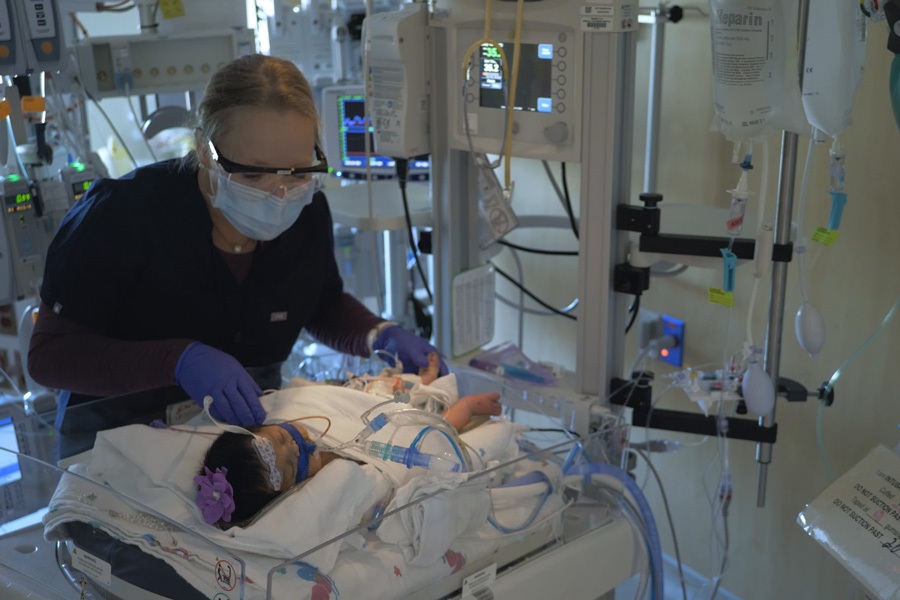
ECMO stands for Extracorporeal Membrane Oxygenation. It is a life-support therapy that temporarily takes over the function of the heart and/or lungs when a patient's own heart and/or lungs are not working adequately. The technology is similar to the heart-lung bypass machine used during open-heart surgery.
How VA ECMO works 2 large catheters (tube) are placed in a patient’s Vein and Artery.
- A centrifugal pump in the ECMO circuit creates negative pressure to gently pull blood out of the patient’s Vein
- The blood flows into the ECMO circuit, where:
- A membrane oxygenator (artificial lung) adds oxygen and removes carbon dioxide.
- A heat exchanger warms the blood to maintain normal body temperature.
- The now oxygen-rich blood is returned to the body through another large catheter placed in a major Artery, either the aorta, right internal carotid artery, or femoral artery.
This process bypasses the heart and lungs, giving them time to rest and recover while providing essential circulation and oxygenation.
ECMO is most commonly used in critical care settings, such as neonatal or pediatric intensive care units, for conditions like severe respiratory failure, heart failure, or during recovery from certain surgeries. It requires close monitoring by a specialized team.
How VV ECMO works
VV ECMO stands for Veno-Venous Extracorporeal Membrane Oxygenation. It is a life-support therapy that temporarily takes over lung function (oxygenation and carbon dioxide removal) when a patient's lungs are severely failing, but the heart is pumping adequately on its own.
Unlike VA (venoarterial) ECMO, which supports both heart and lungs, VV ECMO is primarily a respiratory support strategy. It is often preferred in pediatric and neonatal cases of isolated severe lung failure (e.g., refractory hypoxemia from conditions like meconium aspiration syndrome, pneumonia, or ARDS).
How VV ECMO works (typical configuration in children/neonates):
- One or more large catheters (cannulas) are placed in major veins (commonly the right internal jugular vein and sometimes femoral veins.
- A centrifugal pump in the ECMO circuit creates negative pressure to gently pull deoxygenated blood out of the patient.
- The blood flows through the ECMO circuit, where:
- A membrane oxygenator (artificial lung) adds oxygen and removes carbon dioxide.
- A heat exchanger warms the blood to maintain normal body temperature.
- Now oxygen-rich blood is returned to the patient's venous system (often back into a large vein, such as the right atrium via the same or a separate cannula).
This process allows oxygenated blood to mix with the patient's venous return, improving overall systemic oxygenation while allowing the damaged lungs to rest and recover. The heart continues to pump this oxygenated blood to the body.