
How Preterm Labor and Delivery Affects Baby and Mother
On average, a healthy pregnancy lasts 40 weeks. When you begin labor before 37 weeks of gestation, it’s considered preterm labor, according to the American College of Obstetricians and Gynecologists. This early labor often results in premature birth, which can come with a range of complications for the baby and the mom.
Preterm Labor Risk Factors
Preterm labor can begin as early as 20 weeks after getting pregnant. Whenever it occurs, it’s more common among Black women and women who are younger than 18 or older than 35.
Your risk of preterm labor and birth also increases with the following:
- Becoming pregnant with the assistance of in vitro fertilization
- Being pregnant with multiples (twins, triplets, etc.)
- Experiencing pre-pregnancy health problems, such as diabetes, high blood pressure, urinary tract infections, or sexually transmitted infections
- Having given premature birth to other children
- Lacking a social support system
- Smoking, using illegal drugs or drinking alcohol
- Undergoing emotional, physical, or sexual abuse
- Working long hours while standing
If you’re at risk, talk to your doctor about magnesium sulfate. Taking this medication may reduce your child’s likelihood of being born with cerebral palsy.
Symptoms of Preterm Labor
Labor before 37 weeks of gestation starts with frequent contractions. Your cervix may begin to dilate, and you may notice other signs and symptoms of preterm labor. These include:
- Abdominal cramps or menstruation-like cramps
- Back pain that is dull and constant
- Blood or fluid leaking from the vagina
- Diarrhea
- Pressure in the hips or pelvis area
- Water breaking (leaking amniotic fluid)
If you notice any of these symptoms, contact your doctor immediately. A pelvic exam, fetal fibronectin test, transvaginal ultrasound, and other tests help determine whether you’re in labor. If your doctor diagnoses you with preterm labor, fast medical care from a Maternal Fetal Medicine specialist helps protect you and your baby.
Effects of Premature Labor and Delivery on Your Baby
The last few weeks of pregnancy are essential for development. During this time, development continues in a baby’s brain, circulatory and musculoskeletal systems, lungs, and nervous system.
Babies born before 37 weeks of pregnancy don’t have a chance to complete these developmental steps. As a result, they can face a wide range of complications. Some of these difficulties can continue throughout life.
Physical Effects Premature Babies Face
A few effects that preterm labor and birth can have on a child’s physical health include:
- Breathing issues. Some premature babies develop a lung disease called bronchopulmonary dysplasia. This causes lung scarring and increases the risk of pneumonia. Premature babies may also get asthma [PDF, 5.68 MB], which can cause lifelong symptoms.
- Hearing problems. When prematurity leads to hearing loss, it can cause other issues. Most commonly, audiology issues cause future problems with speech, language, and social skills.
- Increased infections. A premature baby's underdeveloped immune system may have a hard time fighting off infectious diseases. This increases the risk for infections, especially early in life.
- Low birth weight. Preterm labor and birth often result in low birth weight. This can cause various problems, including approximately 14% of infant deaths, according to the Centers for Disease Control and Prevention.
- Vision problems. Children born prematurely may have underdeveloped eyes. When this happens, children experience issues with their vision.
Mental Health Issues Experienced by Preemies
Preterm labor can also lead to mental health issues for the baby, especially when birth takes place at 28 weeks or earlier. These may include:
- Attention-deficit hyperactivity disorder (ADHD). Children with ADHD have a hard time focusing. They may squirm around, talk a lot, and have a hard time getting along with others. Symptoms may begin to present in the preschool or elementary years.
- Autism spectrum disorders (ASD). Children with ASD have noticeable difficulties with communication and interaction with others.The earlier you give birth, the greater the likelihood your child will experience ASD.
- Developmental disabilities. When born prematurely, children may not have a fully developed brain. The results can cause various intellectual problems, making learning, self-care, and other activities more difficult.
- Other mental health issues. Anxiety and other mental health disorders affect many children born prematurely. However, the risk for these issues decreases as your child grows older.
How Preterm Labor Affects Mothers
Premature birth doesn’t just have consequences for babies. Women who go through preterm labor and birth are at risk for a variety of issues.
A few of these include:
- Anxiety. Having a premature baby can cause a mom to develop anxiety. The risk seems to be higher the earlier you go into preterm labor.
- Depression. Women who give birth to a premature baby are more likely to experience postpartum depression than women who carry their babies to full term. The increase may be due to reduced bonding opportunities with babies who must spend more time in intensive care or under observation.
- Heart disease. Your risk for future heart disease increases if you give birth prematurely. This increased risk affects you whether or not you have diabetes, a history of smoking, or other risk factors for heart disease.
- Post-traumatic stress disorder (PTSD). Managing the stresses of a premature infant can be traumatic. For some women, this can lead to PTSD.
Women experiencing postpartum mental health issues at Driscoll Children’s Hospital have access to our NICU mental health specialists. These experts provide specialized counseling and lead support groups that help new mothers navigate anxiety, depression, and other mental health challenges that may arise.
Family-Focused Care at Driscoll Children’s Hospital
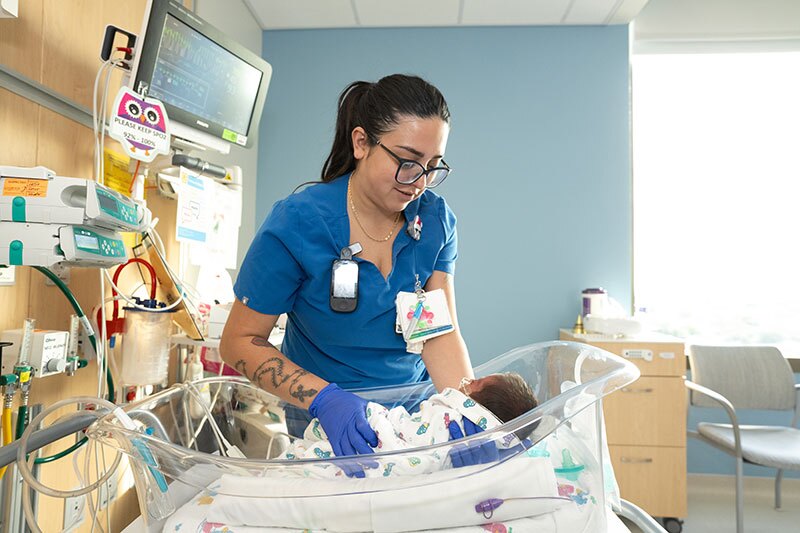
Fortunately for families in South Texas, Driscoll Children’s Hospital is home to a Level 4 Neonatal Intensive Care Unit (NICU). Here, we provide advanced care for premature and critically ill infants.
With state-of-the-art technology and expert neonatologists and neonatal nurse practitioners, we provide 24/7 care for the youngest, most vulnerable patients. A few pieces of technology we use every day include:
- Incubators provide a safe, sterile environment for the baby's continued development
- Monitoring devices to keep a close watch on your baby’s health
- Ventilators to help the baby breathe until the lungs develop more fully
We also offer advanced treatment for any issue premature infants face. From medication to minimally invasive surgery, we offer the full range of treatment advances.
To ensure these services give tiny, fragile babies the best chance at a healthy life, we surround mom and dad with a compassionate multidisciplinary team. These specialists come alongside loved ones and provide invaluable services that provide knowledge and comfort.
Some of the team members who come alongside you on your journey include:
- Child life specialists, who help you navigate the hospital experience and understand any potential health issues your child will face in the present and future.
- Dietitians, who provide nutrition education, monitor your baby’s growth, and develop a custom feeding program for your little one.
- Social workers, who provide support, connect you to helpful resources, and help you prepare to safely transition your new little one home.
Additionally, we go out of our way to help mothers and other family members bond with their babies. You’re encouraged to spend as much time as possible with your baby. This helps ease your anxiety and reduces your child’s risk for complications.
Inside the Driscoll Children’s Hospital NICU, babies receive caring, comprehensive care every day. Meet our NICU team.